AI is already in production. The question is whether you can see the AI activity - and whether you can name who or what is behind that activity.
Most teams cannot. A model call goes out from a workload, and the record of that call, if a record exists at all, stops at a service account or execution role. The service account or execution role does not tell you whether a human kicked off the request, whether a non-human did, whether a third party did, or whether an autonomous AI process did. The answer to a simple question - is AI being used in production, and by whom - turns into an investigation.
What is really being asked when someone asks "is AI running in your production environment?"
"Is AI being used here" is really several questions:
- Is AI being used in production at all?
- Who is using the AI - a human, a non-human, a third party, or an AI process acting on its own?
- Where is the AI activity happening, including inside Kubernetes clusters?
- When a container talks outbound to Anthropic, OpenAI, Vertex, Bedrock, or another provider, can you see that connection and map that connection back to the identity that caused it?
ClearVector answers these questions by mapping activity to the originating identity. When a workload calls a model provider, ClearVector (or the ClearVector sensor) sees the activity and attributes that activity to the human, non-human, or third party behind the call. The outbound connection stops being an anonymous line to an external endpoint and becomes a traceable action with a named source.
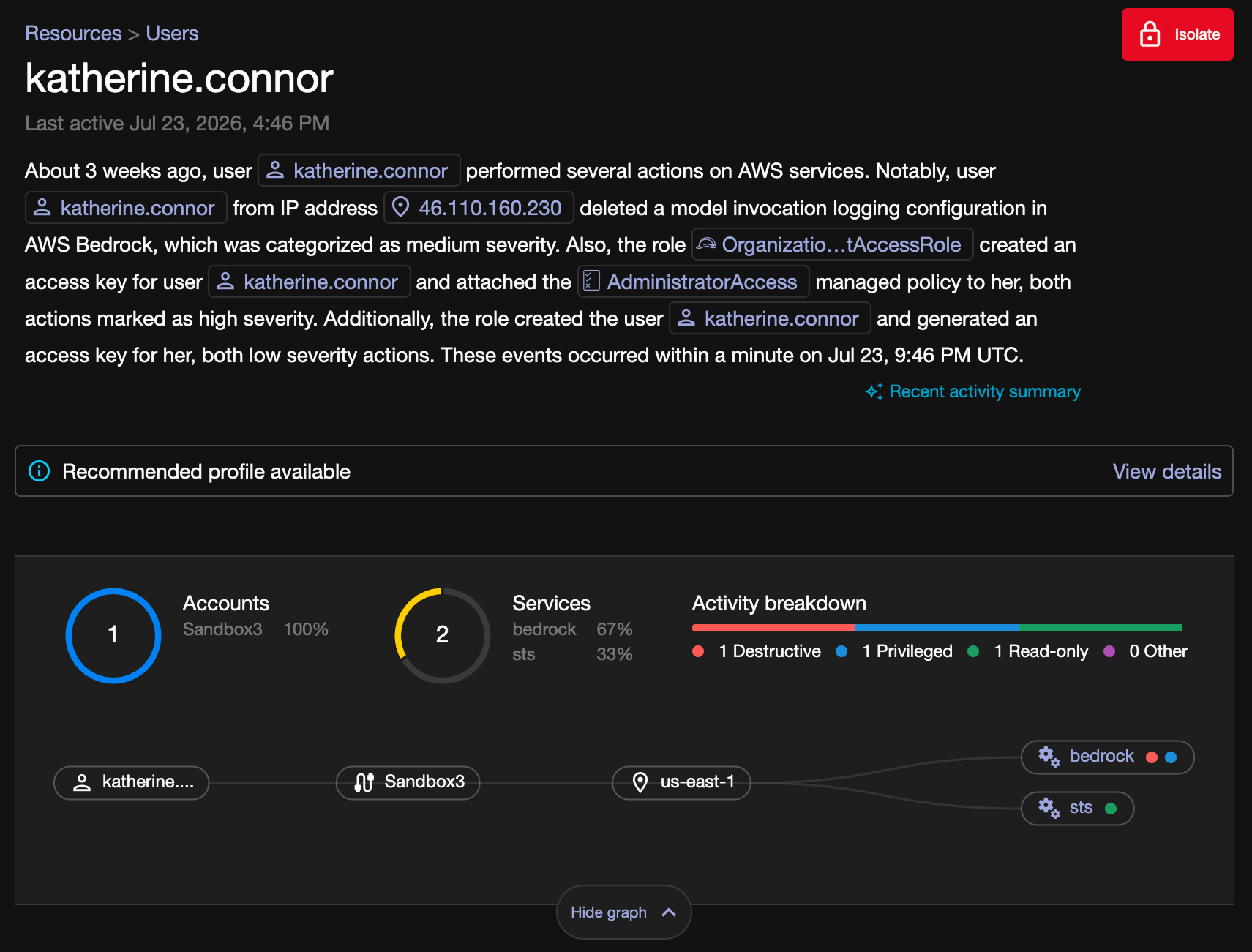
As shown in Figure 1, ClearVector clearly outlines use of AI by a federated identity, katherine.connor, and identifies subsequent disabling of logs and privilege escalation.
Where does AI activity happen in production?
AI shows up in production in multiple ways, and ClearVector maps them back to the originating identity.
For example, the first is hyperscaler-native AI - Bedrock and Vertex - where the model runs inside the same environment as the rest of your workloads. The second is direct calls to provider APIs like Anthropic and OpenAI, where a workload reaches outbound to an external endpoint. Whether the AI activity stays inside the hyperscaler or leaves for a provider API, ClearVector sees the activity and names the human, non-human, or third party behind the call.
Why does AI activity "disappear" inside Kubernetes clusters?
Kubernetes is where AI activity most often disappears. Containers are short-lived, network paths are dense, and outbound calls blend into the noise. When a container talks outbound to Anthropic, Vertex AI, or Bedrock, that connection is easy to miss and hard to attribute.
ClearVector gives you visibility inside the cluster. You can see when a container reaches out to a model provider - whether the destination is a native-hyperscaler service such as Bedrock or Vertex AI - or a direct outbound connection to Anthropic or OpenAI - and you can follow the lineage of that connection back to the workload and the identity that originated the activity. The outbound call is no longer a mystery line in a flow log - the call has a source.
Figure 2 shows a K8s cluster running on GCP with the ClearVector sensor summarizing kubectl exec commands and AI activity.
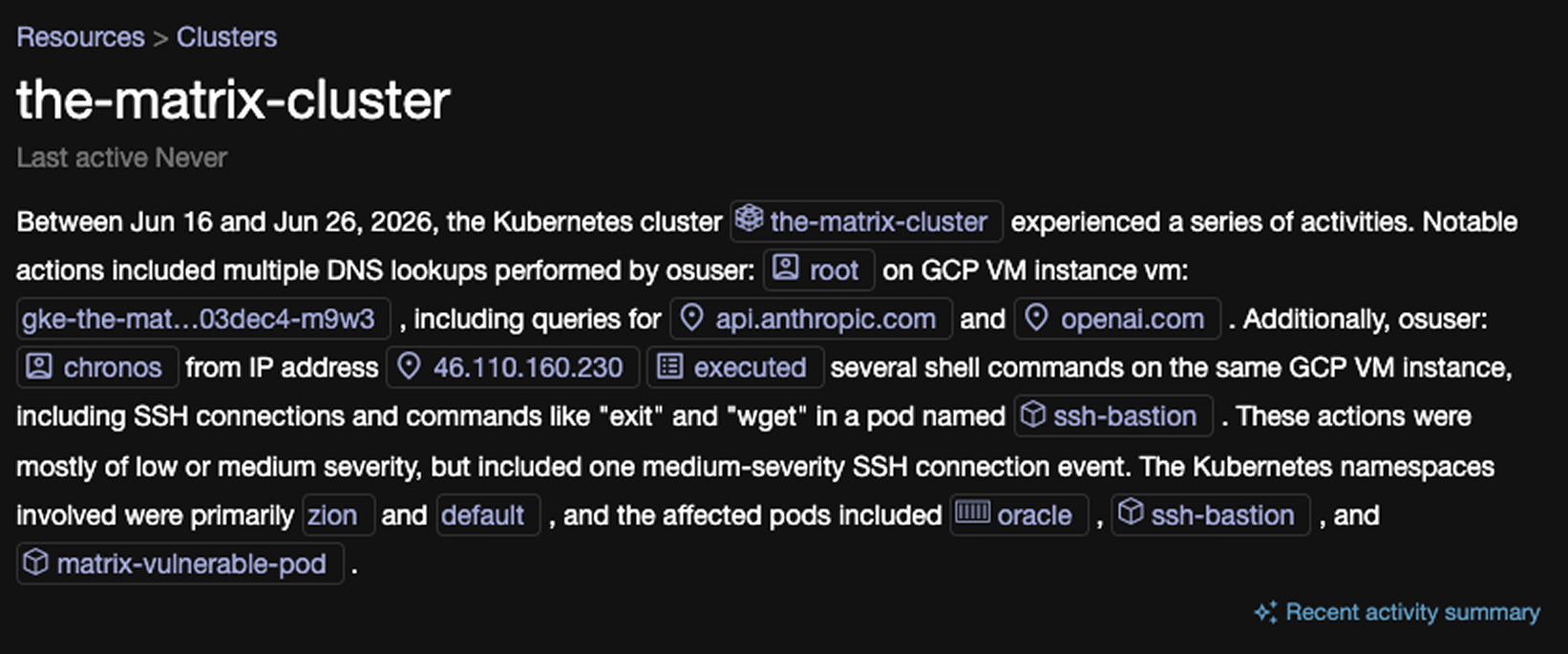
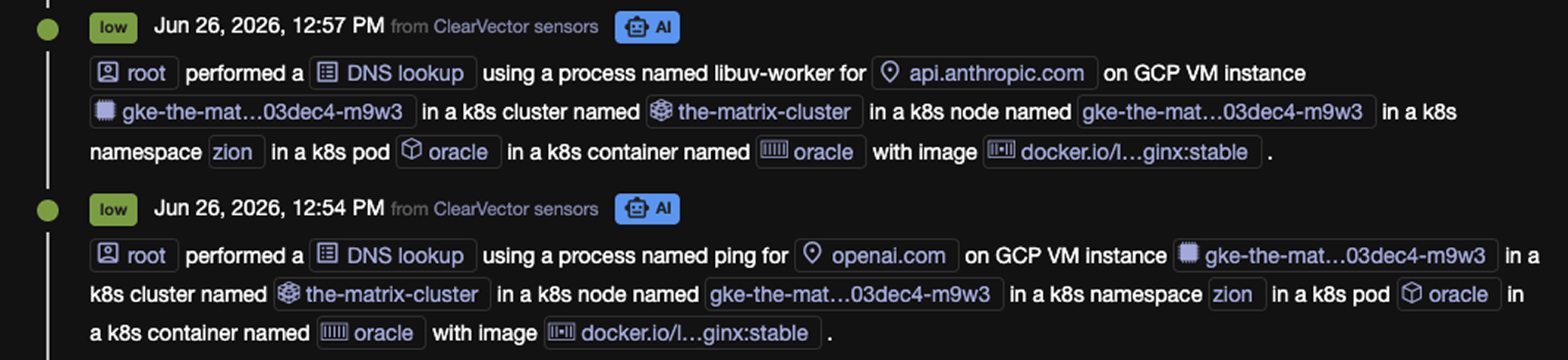
Figure 3 highlights the detailed activity along with the nodes and edges that are tagged with AI.
Who this helps: legal, GRC, and security teams
Legal and GRC teams are increasingly asked to answer a direct question: is AI being used, where, and by whom? Regulators ask it, customers ask it in security reviews, and boards ask it. With activity mapped to the originating identity, the answer is evidence rather than a survey of engineering teams. You can show which humans, non-humans, and third parties are using AI in production, and you can show the AI processes acting on their own.
Security teams get something more specific than a usage inventory. When credentials are stolen, or when credentials are delegated to an AI process without authorization, the resulting model calls carry an identity that does not match the expected source - and the AI-driven share of that identity's activity climbs. Because ClearVector maps every call back to the originating identity, both the mismatch and the shift are visible, and the identity behind the unauthorized activity can be isolated to stop the adversary.
Available now
Visibility into AI activity across production - including inside Kubernetes clusters, with outbound model calls mapped to the human, non-human, or third party behind the call - is available to ClearVector customers today or sign up for a free trial!
Related questions
Can you see outbound calls to OpenAI or Anthropic from inside a Kubernetes cluster?
Yes. The ClearVector sensor observes outbound connections from containers to model providers, including direct API calls to Anthropic and OpenAI and hyperscaler-native services such as Bedrock and Vertex AI, and traces the lineage of each connection back to the workload and the identity that originated the activity.
What evidence can a GRC team produce about AI use in production?
A record of which humans, NHIs, and third parties invoked AI in production, where the activity occurred, which model providers were reached, and which AI processes acted on their own. That record is derived from observed activity rather than from an human-driven survey.
Why do “cloud logs” stop at a service account or execution role?
Because cloud logs typically record the entity that performed the action, not the origin of the request. An execution role is the last hop, not the first. Reconstructing the chain from that role back to the human, NHI, or third party that set the action in motion is manual correlation work, which is why answering "who did this?" turns into an investigation.

%201.avif)