Runtime visibility
See attacks as they happen, not after they’re over
Scanners and logs tell you what happened yesterday, runtime security approaches stop the adversary in the moment, as it’s happening


The challenge
Scanners and logs look backward. Runtime visibility shows what’s happening right now
Scanners provide point in time snapshots, and logs are historical - neither reveal what is happening at runtime or when a vulnerability is being exploited.

Scanners find yesterday's problems
Configuration scanners and vulnerability assessments run on schedules—hourly, daily, or weekly. Between scans, adversaries compromise credentials, exploit vulnerabilities, and exfiltrate data. By the time the next scan runs, the attack is complete and the adversary has moved on or cleaned up their tracks. Further, these products tell you about risk that may or may not be realized.

Logs show history for operational purposes
Logs tell you what already happened, often with significant delays for ingestion and processing. Adversaries exploit this window to complete their mission. Worse, sophisticated attackers disable logging, delete CloudTrail trails, or operate in ways that generate minimal log entries. Further, most log sources are not designed for security use-cases.

Missing the exploitation of the vulnerability
Scanners find vulnerabilities but can't tell you if or when they're exploited. Logs might show an authentication event but miss the malicious commands executed afterward. Neither approach captures the critical moment when legitimate access becomes malicious activity - like when stolen credentials are first used or when a vulnerability is actively exploited. How do you find patient zero?
The solution
See malicious activity as it happens, not after it’s over
ClearVector surfaces actual execution as it occurs in production including data theft during transfer, lateral movement across systems, and post-exploitation toolkits. Teams can respond immediately with a holistic understanding of activity, instead of piecing everything together after the fact.
Catch adversaries in the act
Our runtime approach observes actual execution as they happen. This means detecting the post-exploitation toolkit, detecting cryptocurrency miners the moment they start, catching data theft during transfer, and spotting lateral movement as adversaries pivot between workloads, the control plane, and across cloud providers.
See what logs and scanners can’t
Our runtime approach captures activity that never appears in logs: interactive commands, in-memory attacks, reverse shells, and commands executed inside containers or Lambda functions. It also sees beyond what scanners check: active exploitation of vulnerabilities, not just their mere existence.
Response time in seconds, not hours or days
When detection happens at runtime, you can stop attacks immediately - isolate compromised identities, terminate malicious processes, block data exfiltration, or collect additional evidence while it's happening and available. This transforms incident response from forensic analysis to active defense.
As close to the metal as possible
Traditional tools poll or scan on a regular basis, others require you to put data into a bucket or log store. ClearVector’s approach is to be as close to the metal as possible - for example, in AWS we sit on the EventBridge bus - we also have a Sensor that operates at the kernel level (eBPF) with proprietary capabilities that produce unique signals that includes items such as interactive commands.
A 10-minute detection delay is the difference between stopping data theft and explaining it to regulators.
.avif)
Unified streaming engine
Our product is built on our proprietary streaming engine where events flow from the downstream runtime environment all the way through to notifications without batch processing or log aggregation delays, enabling our detection engine to notify almost instantaneously.
Every delay in processing data from a potentially compromised environment can lead to a greater impact as the adversary continues to expand their reach within the environment.
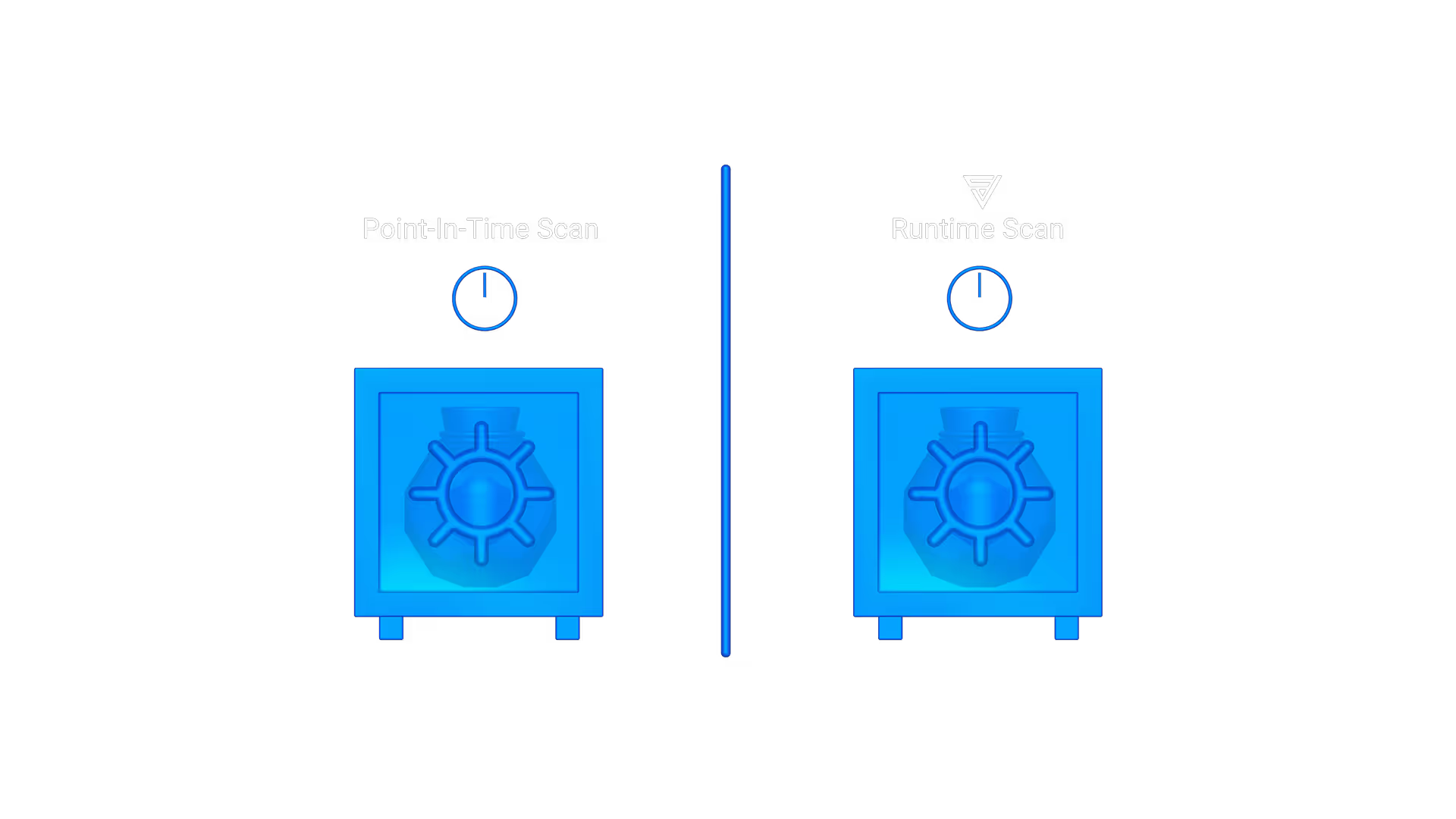
Runtime vs point-in-time scanning
Scanners provide snapshots - "at 2 PM, this S3 bucket was public." Our runtime approach provides detailed information - "at 2:47 PM, John accessed this public S3 bucket and downloaded 10GB of customer data."
The difference is knowing not just what's misconfigured, but what's being actively exploited.
Get started